Checking on a site shouldn't take five logins
Most agencies I talked to were running client sites the same way. Log into WP-Admin, update one plugin at a time, hope nothing breaks, then do it again on the next site. There was no single place to see which sites needed attention, and no easy way to show a client that the retainer they're paying for is actually doing something.
Manage is our answer to that. It's a management layer built into Elementor itself, so agencies can update, monitor, and report on every site without leaving the product they already use.
What agencies actually told us
Risky Plugin Updates
Plugin updates frequently break sites, forcing manual testing and site-by-site updates.
No Centralized Mgmt.
Users rely on third-party tools because native multi-site management is missing.
Backup Reliability
Backups fail silently or expire, creating recovery risks.
Manual Client Reporting
Agencies manually compile maintenance and performance reports.
Client-Induced Breakage
Clients accidentally break layouts, plugins, or site performance.
Where we stood against nine competitors
We benchmarked nine tools on install base, pricing, and feature coverage.
Feature distribution across the field
What we decided to build
Each of these traces back to something specific from research or the competitive audit.
Own the maintenance layer
Safe updates, uptime monitoring, and performance transparency are built in.
Integrate across Elementor
Manage should feel like part of the Sites view and Single Site View, not a separate tool bolted on the side.
Prove value to clients of clients
Give agencies client-ready reports they can use to justify their retainers.
Scale for agencies
Design for multi-site from day one, not a single-site tool with bulk actions added later.
Building the maintenance layer
What shipped in the MVP.
- WordPress plugin for connect, sync and troubleshooting
- Redesigned Websites Tab, with overview, columns, ordering and bulk selection
- Redesigned navigation, so Elementor's products each have their own identity
- Bulk update monitoring for plugins, themes and WordPress core
- Safe updates with automatic rollback if something breaks
- Single Site View, with header, navigation and management surfaces
- One-click login for any connected site
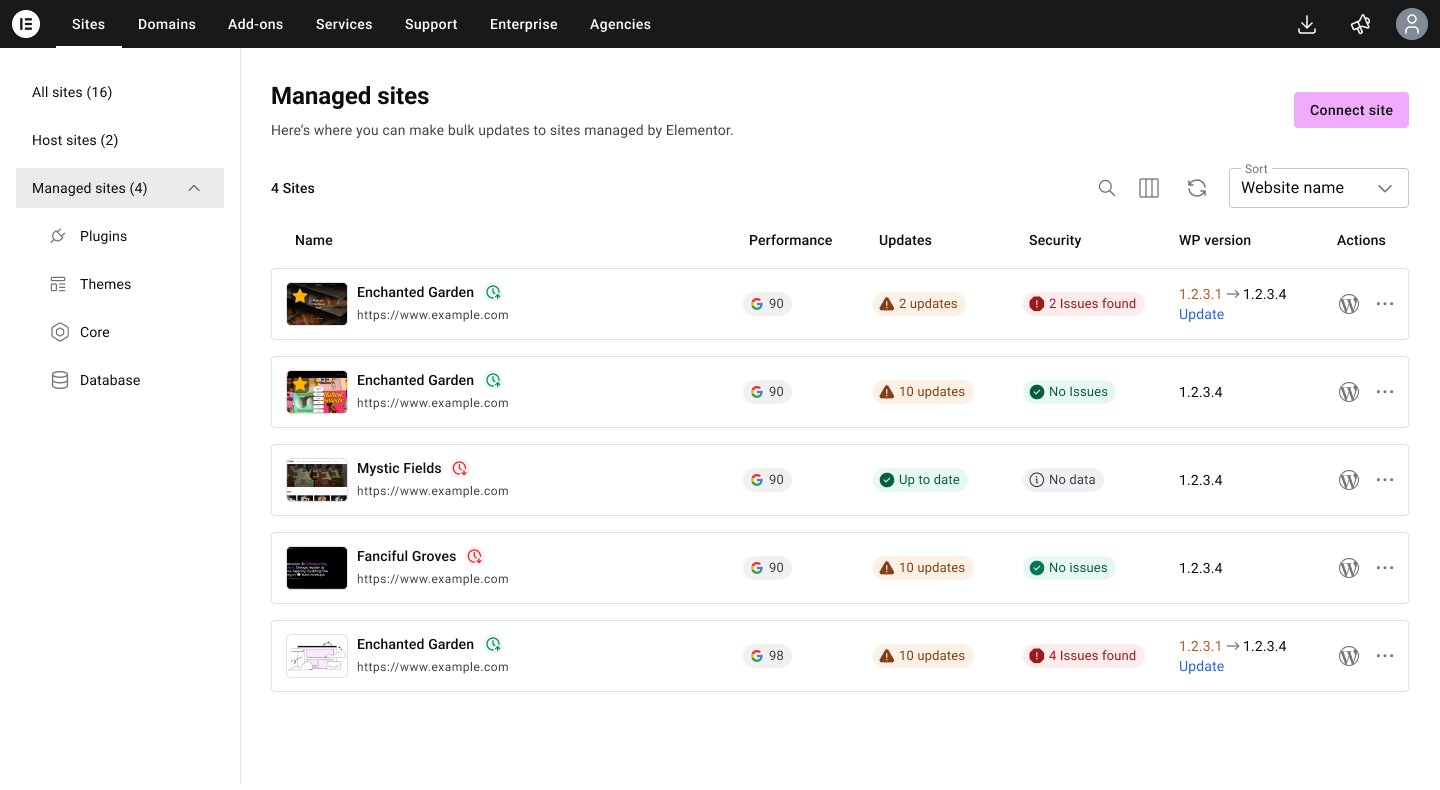
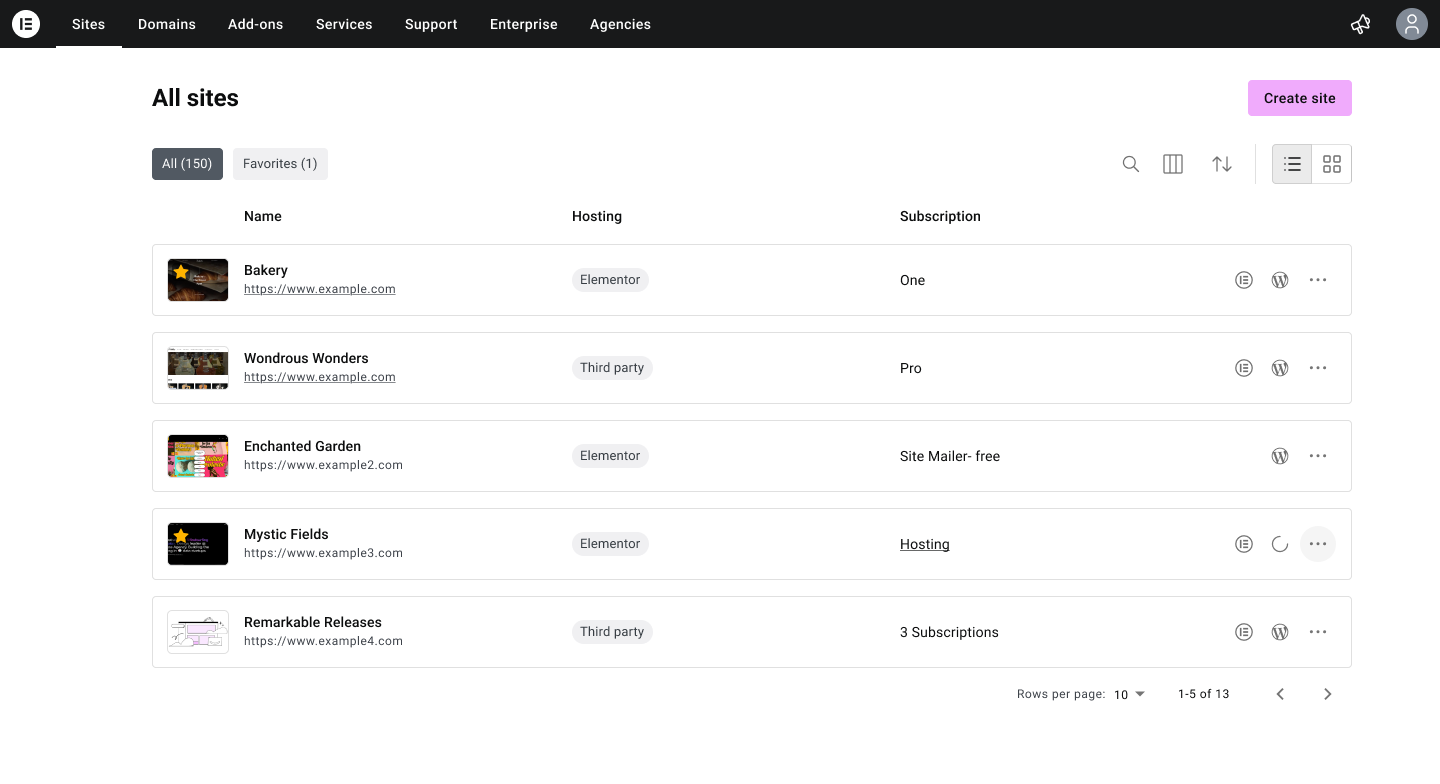
Managed sites View — The bulk view. Every connected site in one table, with performance, monitoring, update, and security status side by side, plus a sidebar to jump into plugins, themes, core, or database actions across all of them at once. This is the stop logging into five dashboards screen.
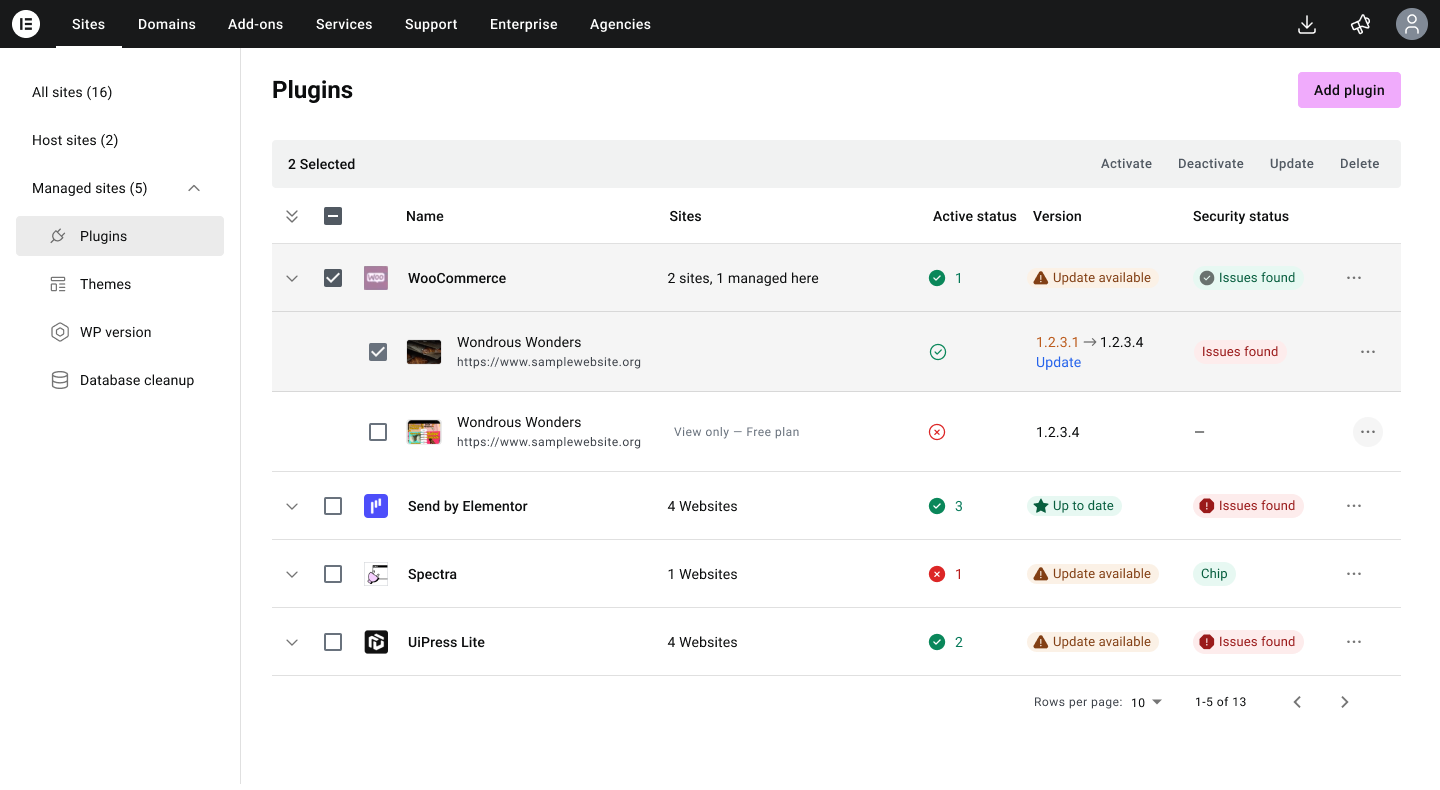
Plugins — One of the actions reachable from that sidebar. Every plugin across every connected site, with the option to select a handful of sites and a handful of plugins and activate, deactivate, update, or delete across all of them in one action.
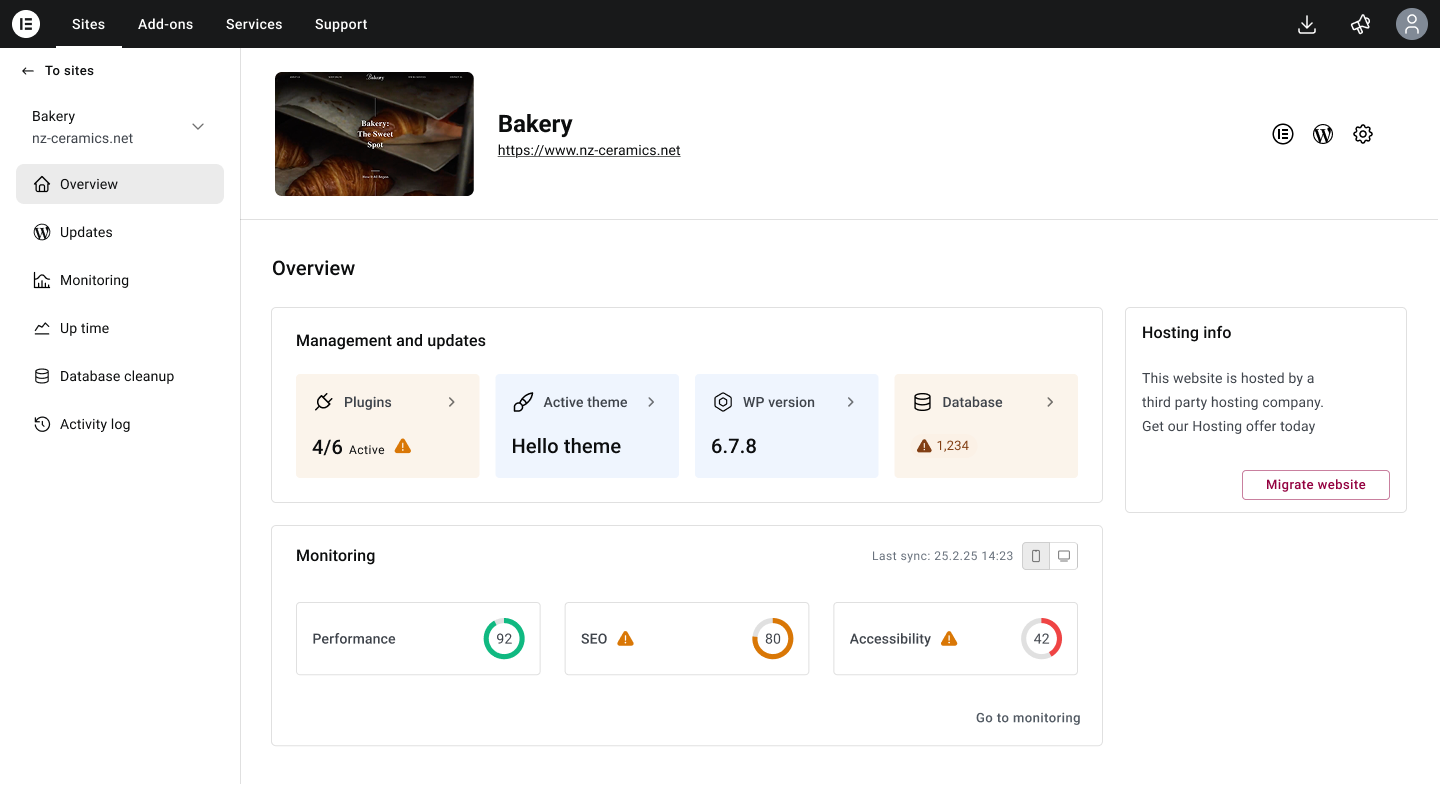
Overview — The single site view for a connected site. Plugins, theme, WP version and database status at a glance, plus a live performance, SEO and accessibility score. Built so an agency can tell if a site needs attention without clicking into anything.
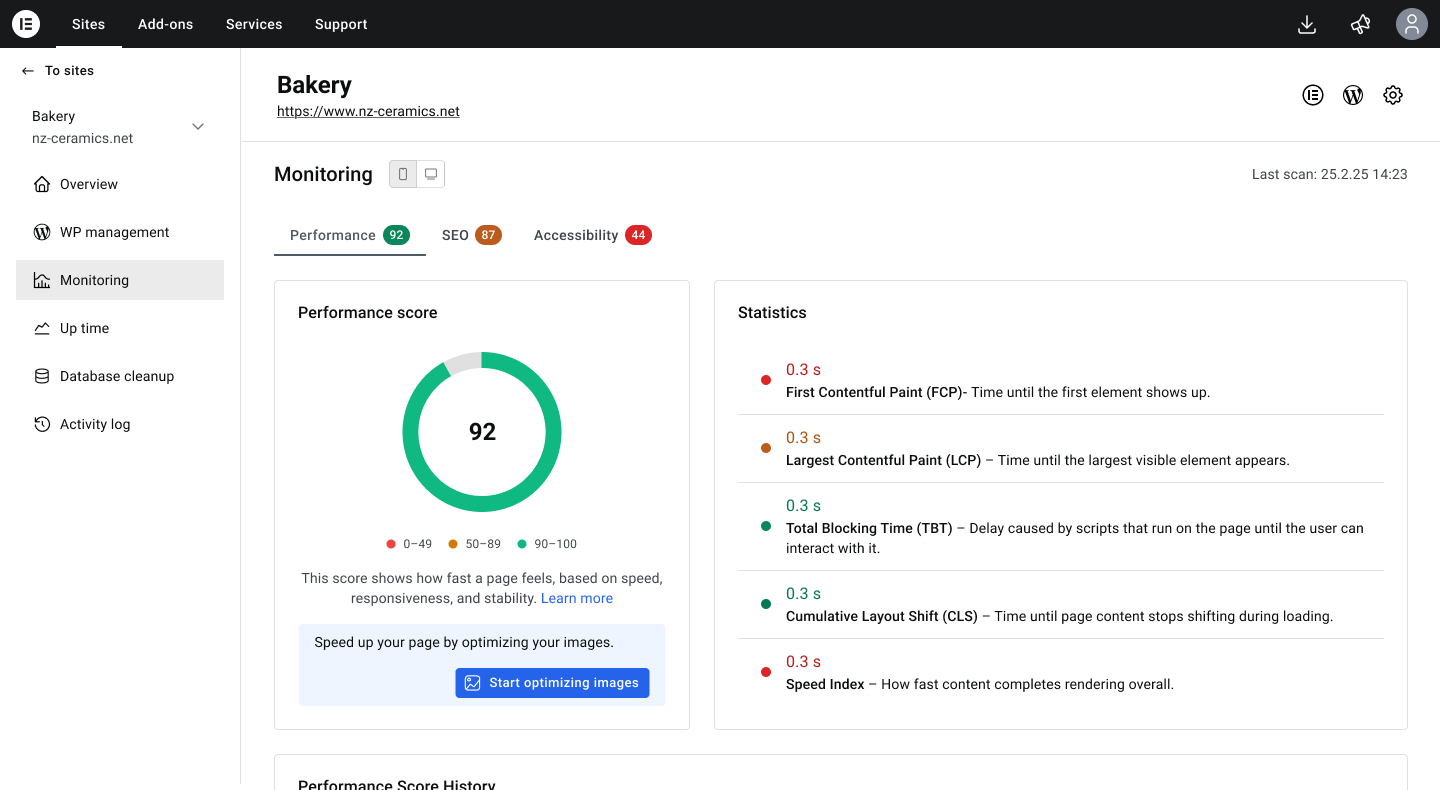
Monitoring, performance detail — Drilling into one site's performance. Score, core web vitals broken into plain language, and a direct suggestion for what to fix first. The goal was turning a raw PageSpeed number into something a non-technical agency owner could actually act on.
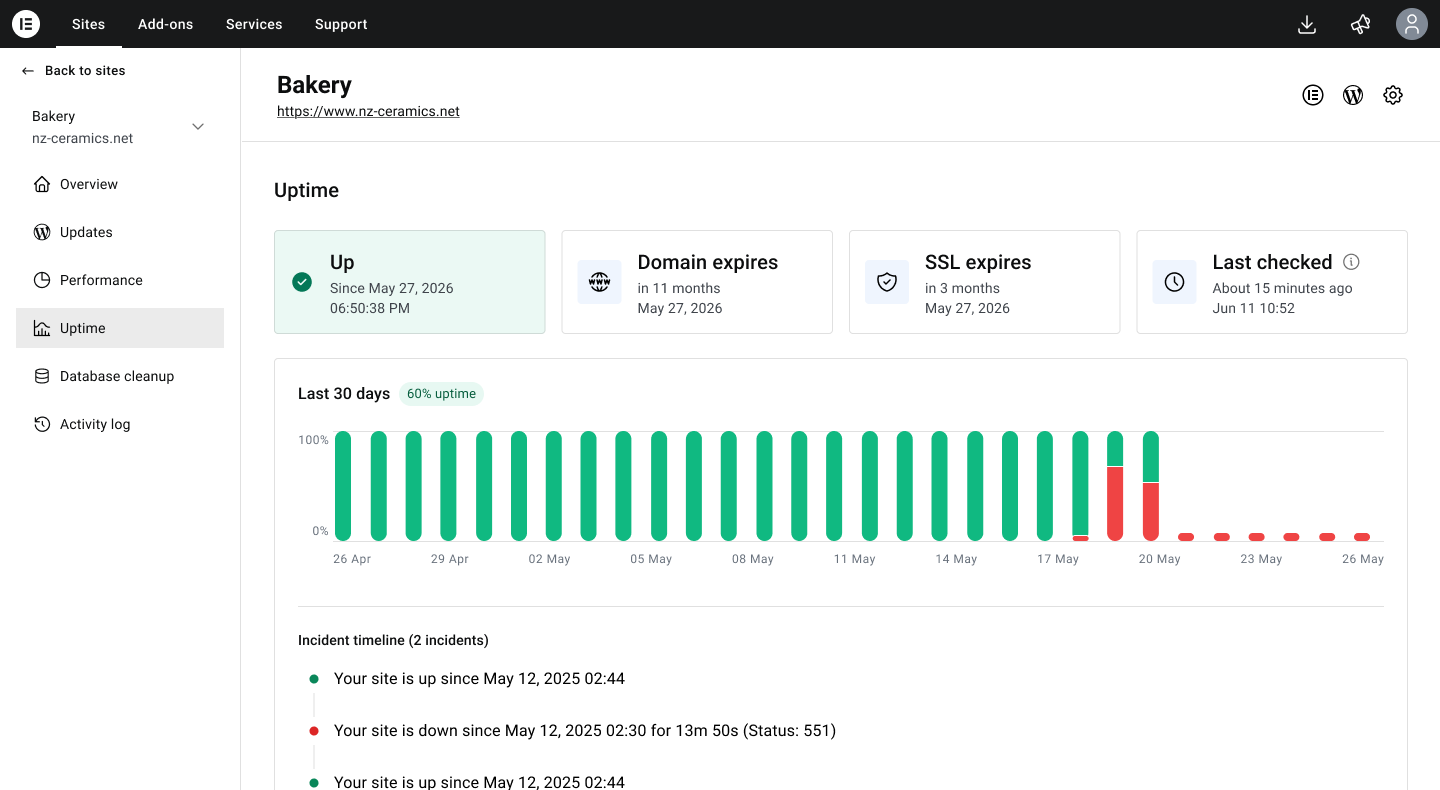
Uptime — Up or down status, domain and SSL expiry, and a 30-day history with a log of incidents underneath. Small screen, but it answers the question agencies asked most in interviews: is anything broken right now.
What happened after we shipped
Where we're headed
Want to go deeper on any of this?
Happy to walk through the research, the trade-offs we made, or why a couple of these decisions almost went the other way.